Loading…
Business Process Analysis
IBM Technology · the source
Summary
Business Process Analysis (BPA) is a structured approach aimed at improving organizational processes. Unlike Business Process Management (BPM) and Business Analysis (BA), which focus on broader operational aspects, BPA zeroes in on specific processes to enhance efficiency and governance. BPA can lead to better employee experiences and compliance by identifying and rectifying inefficiencies in existing workflows, such as onboarding or expense submission processes.
### Benefits of BPA
BPA offers several advantages, including:
- Increased Efficiency: By analyzing and refining processes, organizations can streamline operations, making them more effective.
- Improved Governance: BPA helps identify compliance issues and develop plans for improvement.
- Enhanced Company Culture: By improving processes, BPA can positively impact employee experiences, fostering a better workplace environment.
### Methodologies Guiding BPA
Two primary methodologies guide BPA:
1. Six Sigma: A methodology that typically involves a five to seven-step process to analyze efficiencies and constraints.
2. Lean Six Sigma: Combines Six Sigma with Lean principles, focusing on eliminating non-value-adding tasks and optimizing processes.
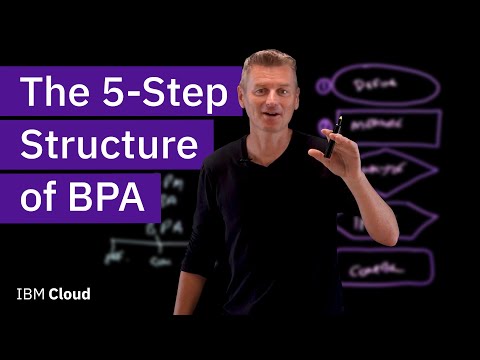
### Five-Step Structure for BPA
The implementation of BPA follows a five-step structure:
1. Define: Identify the process to analyze, starting with the current state (as-is processes).
2. Measure: Evaluate the process against defined metrics, such as Key Performance Indicators (KPIs), which assess effectiveness, quality, productivity, and value.
3. Analyze: Conduct various analyses, including value analysis, gap analysis, and root cause analysis, to understand what is working and what is not.
4. Improve: Develop and execute plans to enhance the process, which may involve remapping workflows or reallocating resources.
5. Control: Use the insights gained to manage resources and monitor changes for future analysis.
### Hyper Automation
The discussion also highlights the emerging industry of hyper automation, valued at $600 billion. This industry leverages advanced technologies like AI and robotic process automation to automate tasks traditionally performed by humans. BPA plays a crucial role in this transition by providing a documented framework for integrating automated processes, such as implementing chatbot support in customer service to reduce costs and optimize support.
In summary, BPA is a comprehensive method for examining and improving business processes, ensuring organizations can identify strengths and weaknesses and implement necessary changes effectively.
Key points
- BPA focuses on specific process analysis to improve efficiency and governance.
- The five-step structure for BPA includes defining, measuring, analyzing, improving, and controlling.
- Key Performance Indicators (KPIs) are used to measure process effectiveness and quality.
Chapters
- 0:00 — Introduction to BPA
- BPA stands for Business Process Analysis, distinct from BPM and BA.
- BPA focuses on specific process analysis to improve efficiency and governance.
- Can enhance employee experience by improving processes.
- 0:38 — BPA Methodologies
- Two main methodologies: Six Sigma and Lean Six Sigma.
- Six Sigma involves a five to seven-step process for efficiency analysis.
- Lean Six Sigma combines both approaches to eliminate non-value tasks.
- 0:15 — Five-Step BPA Process
- Step 1: Define the process to analyze, focusing on current operations.
- Step 2: Measure performance using KPIs for effectiveness and quality.
- Step 3: Analyze using value, gap, and root cause analyses.
- Step 4: Improve by remapping processes and reallocating resources.
- Step 5: Control by managing resources and monitoring changes.
- 0:39 — Hyper Automation
- Hyper automation is a $600 billion industry.
- Utilizes AI and robotic process automation to automate human tasks.
- BPA aids in creating a path for integrating automated processes.